Tracing Former Owners of Mercer County Land
A backward chain of title always begins with the newest recorded conveyance. From there you follow the named parties through each earlier transfer. The Assessor's parcel search can hand you a deed book and page reference. That reference applies to the current owner of record. The county publishes no online grantor-grantee portal. So the Clerk's office is where deed research happens. The assessment record is not a deed history. Treat it as a pointer. The Clerk is the true recorder for deeds, deeds of trust, releases, liens, easements, and plats in Mercer County.
| Source | Years It Covers | Where Held | What It Shows |
|---|---|---|---|
| Mercer County Clerk land records | Earliest book and online cutoff not verified | County Clerk, Princeton | Recorded parties, instruments, dates, descriptions. |
| WV Property Assessment | Current tax-ticket cycle | Online statewide search | Current roll owner, parcel, value, deed reference. |
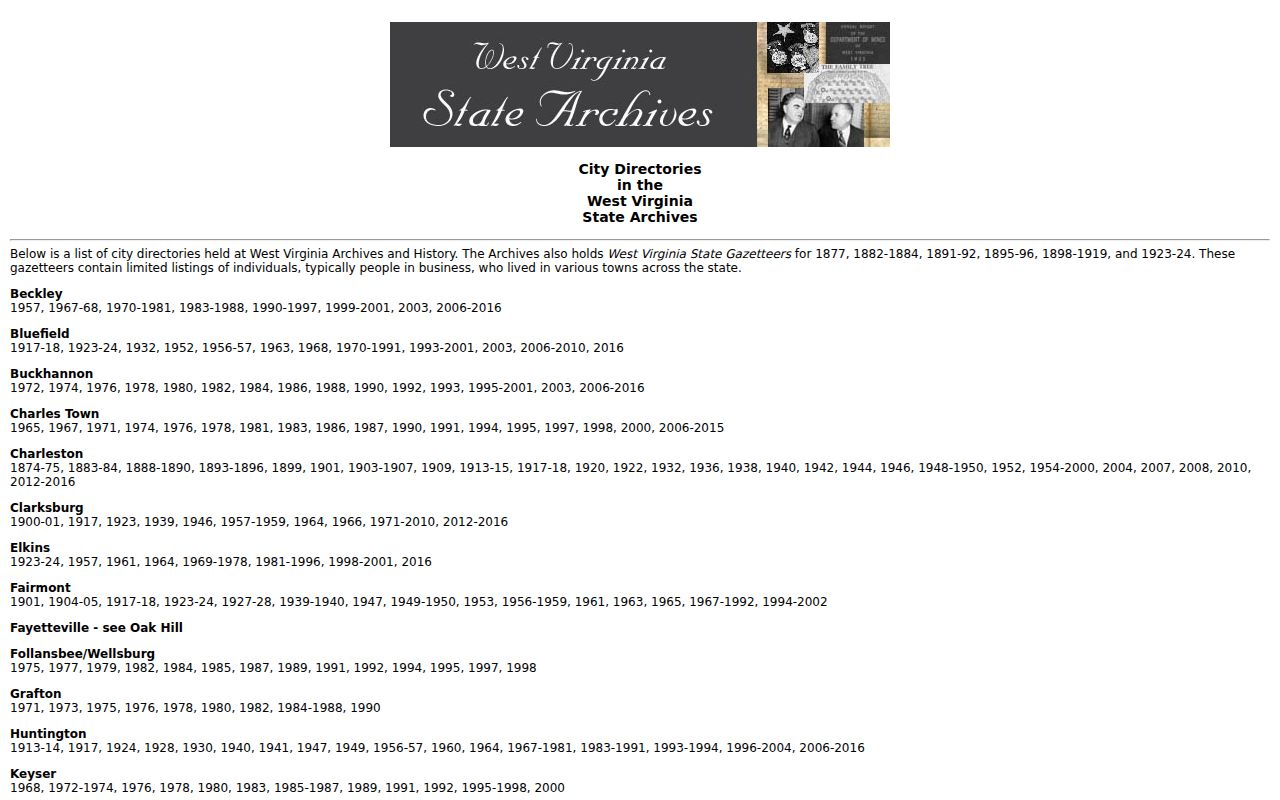
| WV Archives Bluefield directories | 1917-18 through 2016, with gaps | State Archives finding aid | City names and street clues, not title. |
| Mercer County Historical Society | Collection dates vary by item | Appointment-based research library | Maps, plat books, newspapers, family and cemetery files. |
A recent transfer is the easy case. Take the Assessor result to the Clerk and ask for the referenced deed. An older chain takes more patience. Request the prior deed by party name and date, plus book and page if you have it, and ask whether older volumes or indexes sit at the counter. The State Archives and the Historical Society add directory, map, and family-history leads, but only the recorded instrument proves ownership in Mercer County.
Walk Back Through Mercer County Deeds
Let the latest conveyance be your first link. The grantee received the interest. The grantor gave it up. Search that grantor's name as a grantee in the preceding transaction, then keep repeating the pattern through Mercer County deed records. Check the legal description too, not just names, because spellings, marital forms, LLCs, trustees, and estate names can shift from one filing to the next.
- Get the current Assessor parcel and the latest deed book/page reference.
- Read the recorded deed and note the grantee, grantor, date, legal description, and exceptions.
- Search the grantor as a grantee in an earlier conveyance and compare the tract description.
- Repeat until the description changes, a probate transfer appears, or the Clerk's oldest available volume is reached.
- Ask the Clerk where an older index or book is kept; the online cutoff is not verified.
- Grantor
- Party who conveyed an interest in the instrument.
- Grantee
- Party to whom the interest was conveyed.
- Chain of title
- The ordered set of transfers used to trace the property's ownership history.
- Legal description
- Written land boundaries or lot reference that can outlast a street address.
How Far Back Mercer County Deed Records Go
Mercer County publishes no stated earliest deed-book year or online index cutoff. That gap limits convenience. It does not mean any deed was destroyed or never recorded. The county was formed in 1837 from Tazewell County, Virginia. So a very old description may carry a Virginia-era reference or a community that predates modern addresses. Ask the Clerk to identify the oldest usable index for your parcel or party name. Then work forward from there.
Lawful use. Former-owner research supports house history, family research, and property due diligence. Do not use a historical owner name or address to track, threaten, or harass a living person.
Stop When the Mercer Land Description Changes
A matching name proves little on its own. The older deed may describe a different tract entirely. Compare acreage, lot and block, district, map and parcel numbers. Then check boundary calls, easements, and any reserved interests. When a parent tract was split, the chain can divide into branches. The same is true when a legal description changed. Track each transfer separately. Do not force one straight line through land that has changed shape. Mercer records can lean on coal-company tracts, creek names, or old roads. Some descriptions use communities that predate street numbers. A tax map helps orient those references. The recorded deed and plat still control the stated legal description. If acreage or a boundary call shifts sharply, pause. Request the prior instrument before making another owner jump in the chain.
Probate Transfers in a Mercer Owner Chain
An estate can break a simple person-to-person trail. A decedent's land may pass through an executor, administrator, trustee, heir, or estate name. The Mercer County Clerk handles the probate functions listed on the county office page. The Circuit Clerk keeps circuit and family court pleadings. Ask which public index applies. Then connect the probate order or appointment to the later recorded deed. Search beyond the decedent's own name. Use aliases, a spouse, the estate name, and the administrator or executor. Add the property parcel number too. A probate file can hold a will, appointment, inventory, notices, sale authority, settlement, and orders. Not every item is public. Death certificates establish identity and date, but they are not title documents. Under West Virginia law, current copies carry eligibility and ID rules.
Mercer County Coal and Mineral Reservations
Older Mercer deeds often describe coal-company tracts or reserve minerals apart from the surface. A tax parcel map shows the assessed surface parcel only. It may not explain every mineral interest, lease, easement, or right of way. Read the deed exceptions closely. Then pull the earlier instrument where a mineral reservation first appeared. Follow the parties and parcel description across each transfer. Coal-camp and rail history can make an old property hard to match with a modern address. The Historical Society, State Archives, local newspaper files, and specialized collections may help identify a place or owner. Use them for a lead. Then return to the Clerk's recorded deed and plat references. Draw no title conclusion about the property before that.
Bluefield Directories and Mercer History
The WV Archives finding aid for city directories lists Bluefield volumes spanning 1917-18, 1923-24, 1932, 1952, 1956-57, 1963, 1968, 1970-1991, 1993-2001, 2003, 2006-2010, and 2016. A directory entry ties a past resident to a street or a business at one moment in time. Treat it as a lead, not proof of ownership. The listed name still needs testing against a deed, plat, map, or newspaper notice.
Broader context comes from the State Archives Mercer County catalog. The local Historical Society adds maps, plats, cemetery records, papers, and family files that explain communities which moved, merged, or vanished. Its research room works by appointment. Before visiting, send the names, dates, communities, and record types you have already checked. Then ask about access, copying, photography, and any fees.
Request Older Mercer County Deeds
Older volumes and unindexed instruments call for a direct request to the County Clerk. Include the parties, the parcel, the legal description, and an approximate date. Add the district, map, and parcel numbers, plus any book and page reference you hold. The office publishes no complete online index, image service, stated earliest year, or copy fee, so ask the counter staff directly. Find out whether the index sits at the counter, whether staff can pull an older volume, and how to order a plain or certified copy.
Access runs through West Virginia FOIA, W. Va. Code §29B-1-3. The law covers public records held by the office. A response is required as soon as practicable, and within five business days once weekends and holidays are excluded. Fees can cover actual reproduction cost. A search or retrieval labor fee is not permitted. A specific request helps the custodian locate the record, though courts, vital records, and protected files remain outside its reach.
The Mercer County Clerk page identifies the recorder for deeds and the county's official-document custodian.
The Mercer County Historical Society research page describes appointment access to maps, plat books, newspapers, cemeteries, and family files.
The Historical Society Collections Studio provides searchable staff finding aids and citation details for local historical material.

The WV Archives directory finding aid lists Bluefield directory years that can supply a historic address clue.